Best Market Intelligence Tools for Research Workflows in 2027
Compare the best market intelligence tools for repeatable research workflows, with clear criteria for data quality, traceability, handoffs, and team fit.
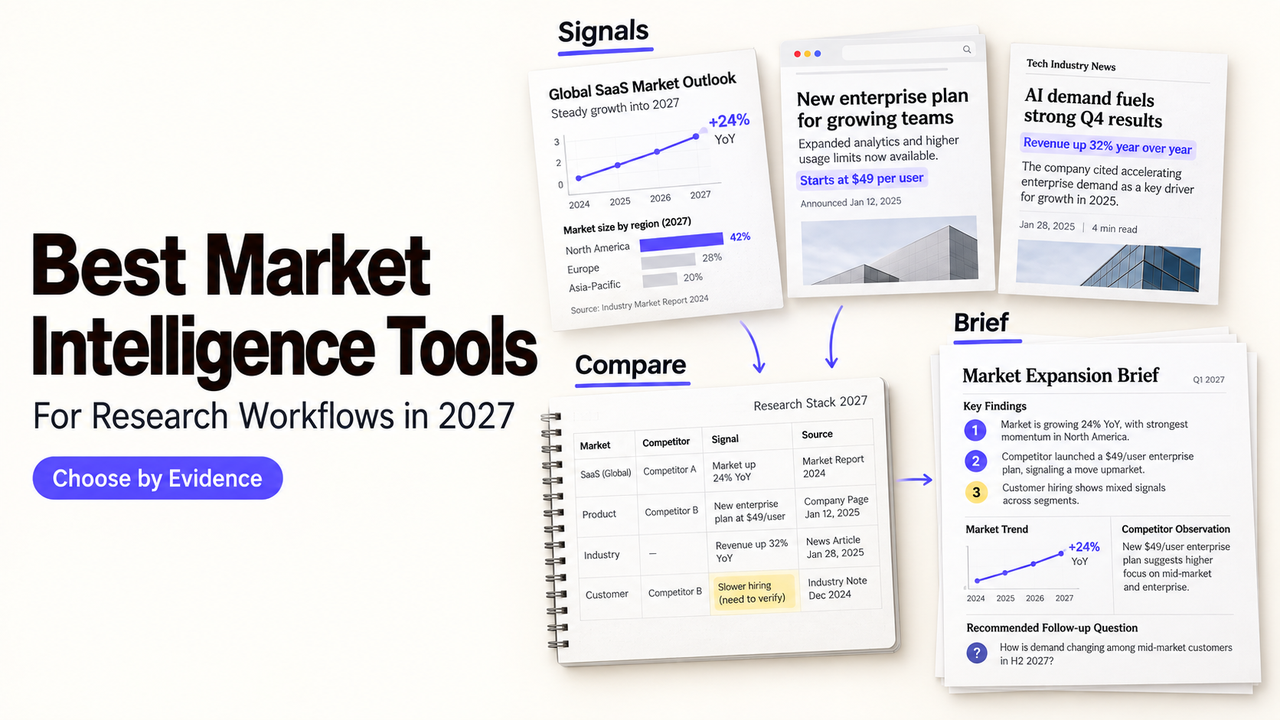
A competitor alert, an account list, and a consumer trend chart can all be called market intelligence. They rely on different evidence and should not share one feature checklist.
The best market intelligence tools fit a repeatable research job. This guide compares seven market intelligence solutions by coverage, traceability, and the quality of the handoff.
I’m Alex. I reviewed current official product and help materials on September 23, 2026. I did not run a matched paid-account test, so the shortlist describes documented fit rather than measured performance.
Quick Shortlist by Research Job
There is no responsible best-overall choice across these categories. Start with the question and evidence type.
Research job | Shortlist | Best documented fit | Important limit |
Competitor changes and enablement | Crayon | Monitoring competitor activity and turning approved findings into battlecards | Public pricing is customized |
Digital market movement | Similarweb | Website, app, keyword, traffic, and audience estimates across markets | Estimates are not the same as a competitor’s primary records |
Cited business and financial research | AlphaSense | Searching filings, transcripts, news, broker research, expert calls, and internal material | Content access depends on subscription and entitlements |
Private-company and market mapping | Crunchbase | Funding, firmographic, investor, company, and modeled market signals | Modeled insights need separate review from reported facts |
Account and GTM research | Apollo | B2B account discovery, enrichment, CRM transfer, and workflow action | Designed for GTM execution, not broad macro research |
Consumer attitudes and behaviors | GWI | Harmonized survey analysis across online consumers and markets | Results represent the covered online population and survey design |
Retail and shopper intelligence | NIQ | Point-of-sale, panel, product, and omnichannel consumer analysis | Coverage and delivery vary by product, market, and engagement |
These are task-fit judgments, not performance rankings.
How We Evaluated Market Intelligence Tools
For market intelligence research, ask what each dataset represents, whether a reviewer can retrace a finding, and whether the result supports recurring work.
Data Coverage and Freshness
Coverage numbers count different things. Similarweb models digital behavior, Apollo covers business records, GWI surveys online consumers, and NIQ measures retail and panel activity. Check the unit, geography, refresh schedule, and historical depth against your decision.
Source Traceability and Export Quality
A useful competitive intelligence report needs its source, date, filters, relevant excerpt, and a distinction between observed and modeled data.
AlphaSense documents exports that retain search parameters and document links. Crunchbase distinguishes some confirmed values from estimates. Other platforms may identify source classes without exposing every record.
Test whether a reviewer can reproduce the finding from the exported artifact.
Workflow Integrations and Team Controls
Findings may need to reach a battlecard, CRM, deck, alert channel, or warehouse. Check the documented export and integration route, then ask who may view licensed content or change downstream records.
Which Tools Are Best for Competitor and Market Monitoring?
1.Crayon — competitor changes that reach sales teams
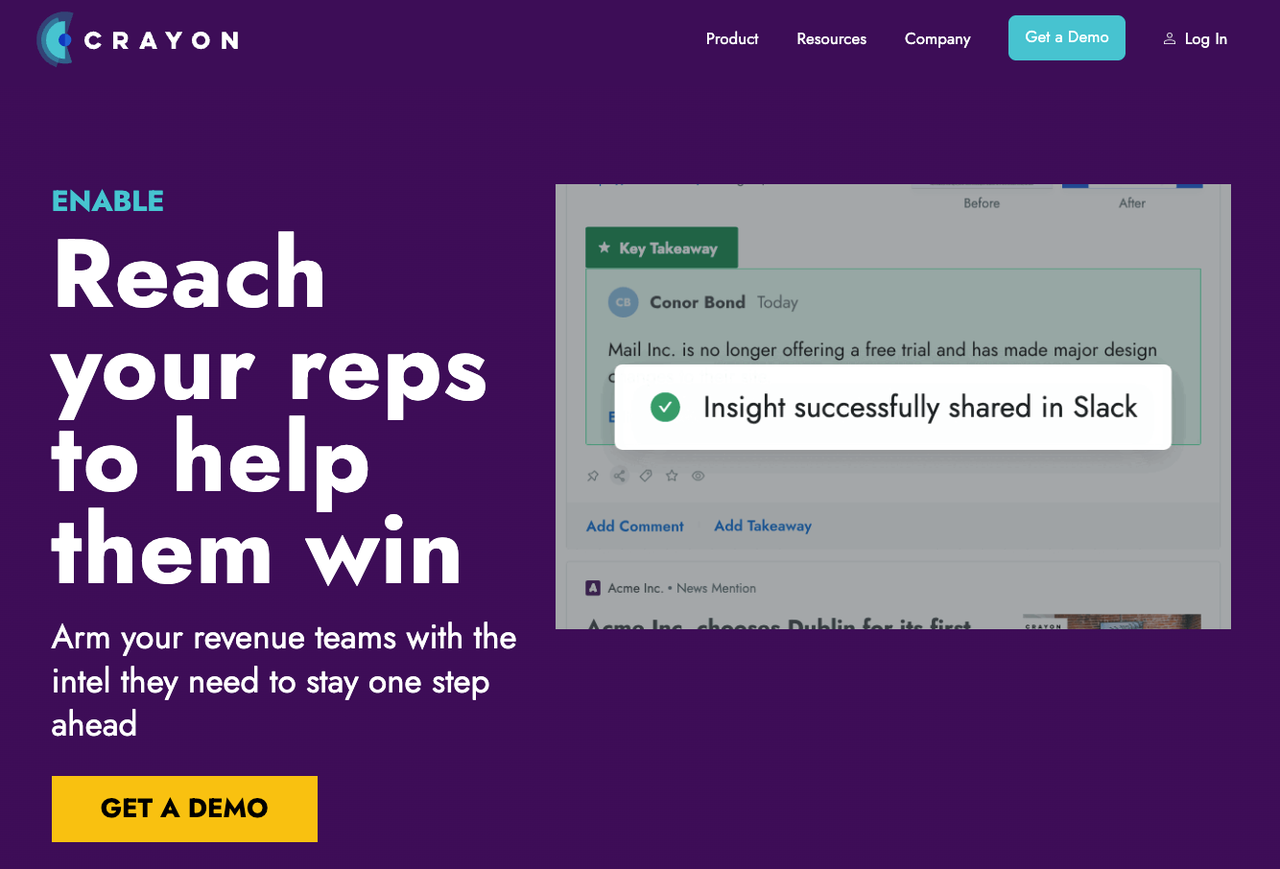
Best for: A competitive-intelligence team that turns monitored changes into battlecards and sales guidance. Crayon's product page documents scheduled research, field intelligence, competitor alerts, and delivery through Salesforce, Slack, Teams, and enablement tools. Test this competitor intelligence platform with a pricing-page change: does it reach the correct battlecard with its original source and date?
Choose it when sales enablement is the destination, not merely a list of competitor URLs. Ask Crayon to show snapshot depth, export options, and the review path for a misleading change. Pricing requires an estimate; the public page does not establish indefinite source retention.
2.Similarweb — digital traffic and search movement
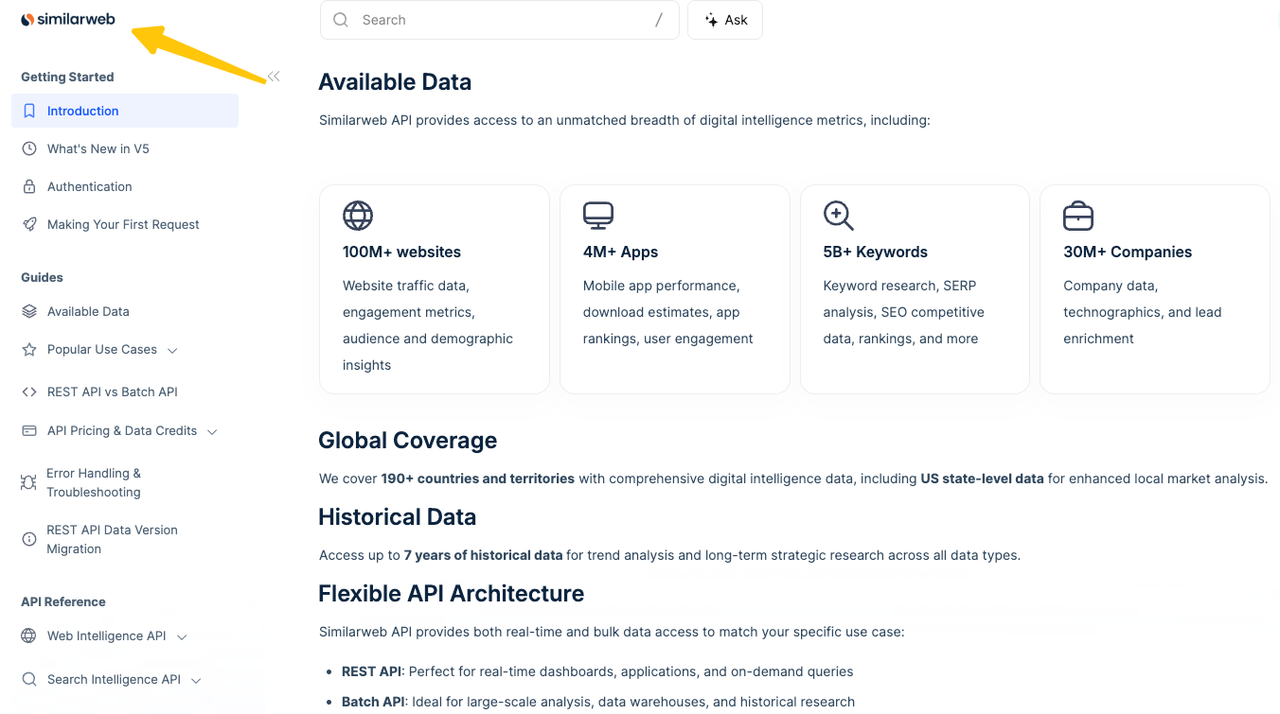
Best for: Comparing digital demand and visibility across websites, apps, keywords, and markets. The Similarweb API documentation lists website, app, keyword, company, geography, and historical datasets with REST and batch access. It states up to seven years of API history; application access varies by package.
A team could track whether a competitor's search or referral mix is changing, then pass the trend to a channel owner. Similarweb figures are estimates of digital activity, not the competitor's reported analytics. Verify the geographic and historical coverage of the exact metric before using it in a market forecast.
3.AlphaSense — cited business-document research
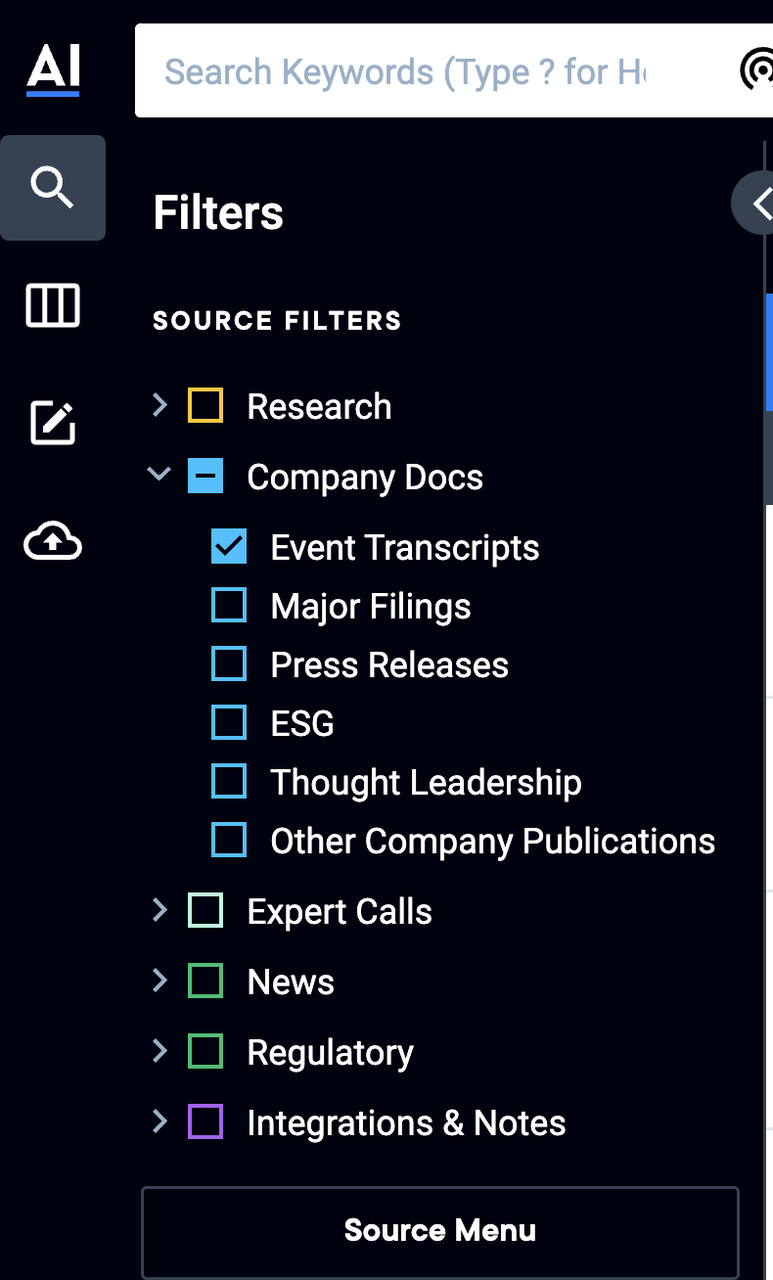
Best for: Questions that need a traceable passage from a filing, transcript, company document, news item, or licensed research. Its content overview separates these sources and explains that access depends on entitlements. Teams can connect internal content under their own setup.
AlphaSense's export guidance says a summary PDF retains search terms, timeframe, sources, and document links; the summary is capped at 250 results. That makes it a candidate for a memo another researcher must audit. Confirm licensed coverage and export rights before treating a missing result as evidence that no source exists.
What Tools Should Teams Use for Account and Go-to-Market Research?
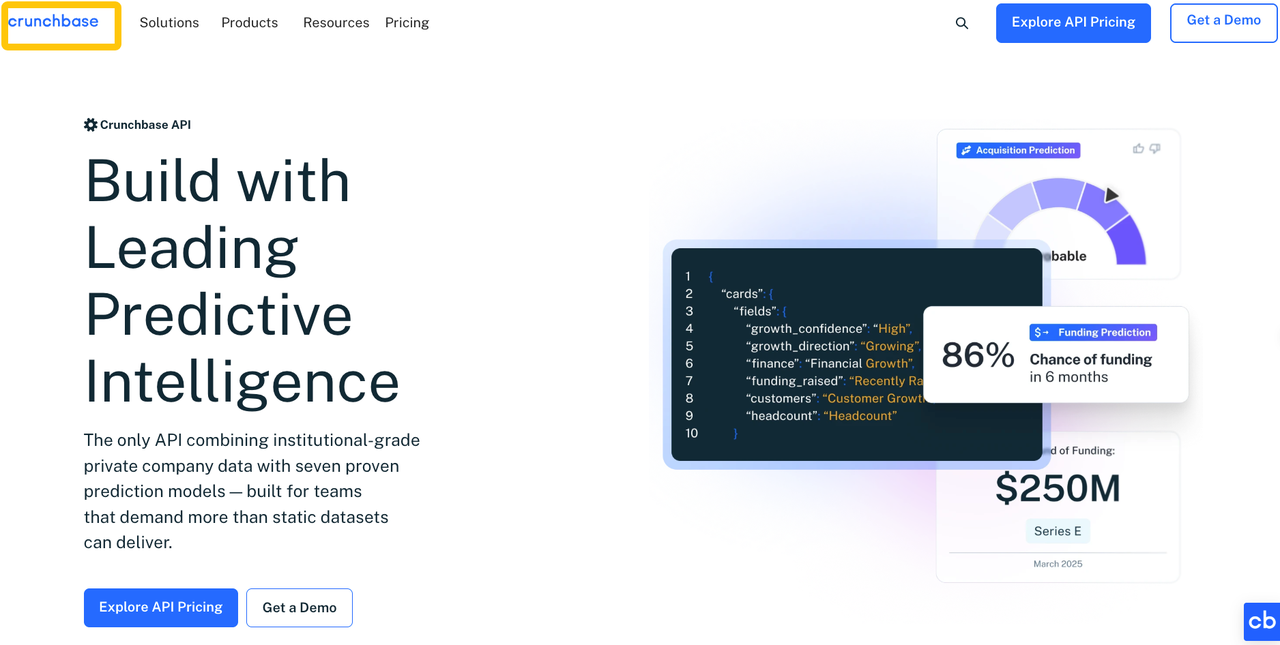
4.Crunchbase — private-company and funding maps
Best for: Building a company universe from funding, investor, firmographic, and related signals. The Crunchbase API offers company information, financial data, signals, insights, and predictions for internal research tools. A strategy team could screen emerging vendors, then review each candidate's profile and funding trail.
Use it for directional market mapping rather than a definitive count of all companies in a category. Its modeled competitive insights are different from company-reported facts and market-size evidence. Check current API pricing, export rights, refresh cadence, and the explanation attached to any prediction before routing a list to leadership.
5.Apollo — account research that passes to Sales
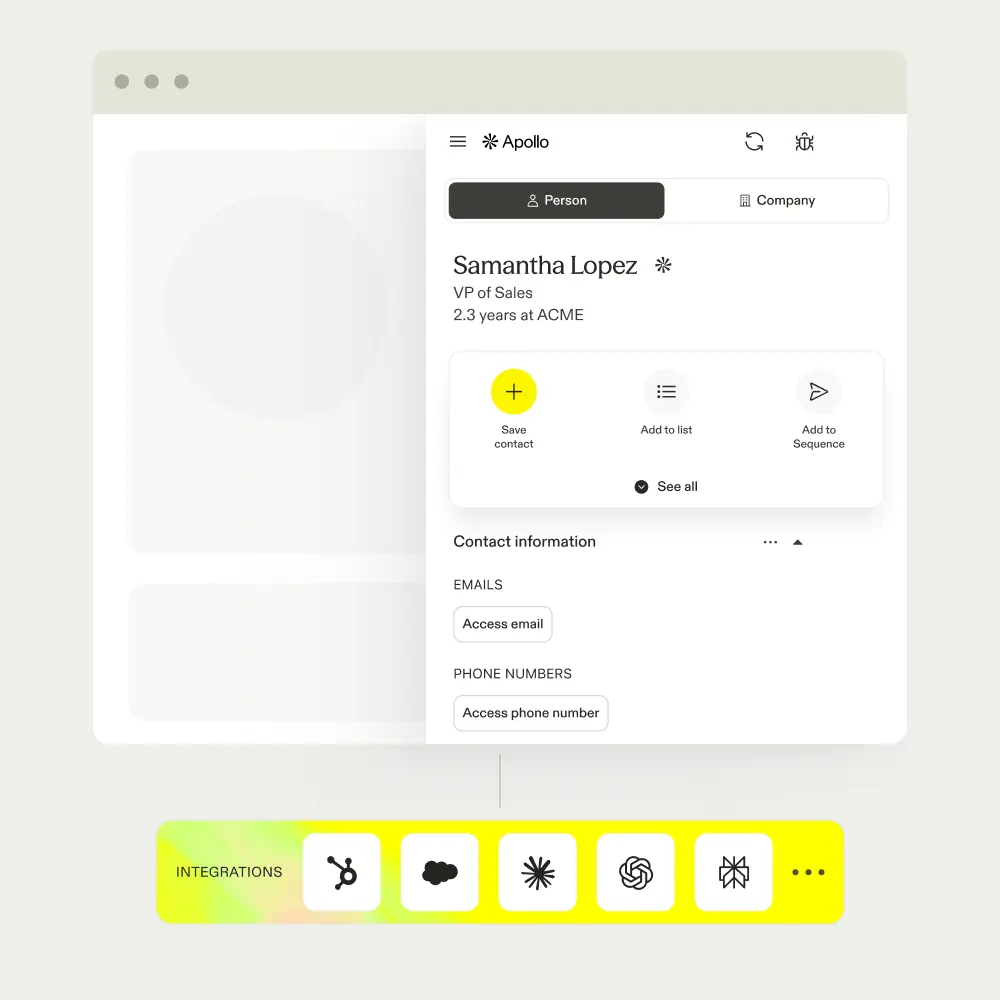
Best for: A sales or RevOps team that needs account and contact research followed by CRM work. Apollo's data overview describes company and contact records, verification processes, enrichment routes, and bi-directional CRM integrations. A useful pilot compares a known account list with Apollo's results before any CRM write.
Apollo is less suitable for consumer attitudes or broad market sizing. Public materials do not promise a source citation for every exported field. Check geographic coverage, duplicate handling, field accuracy, credits, and applicable contact-data rules. Let a sales owner approve which researched records enter the pipeline.
What Are the Best Tools for Consumer and Retail Intelligence?
6.GWI — surveyed consumer attitudes and behavior
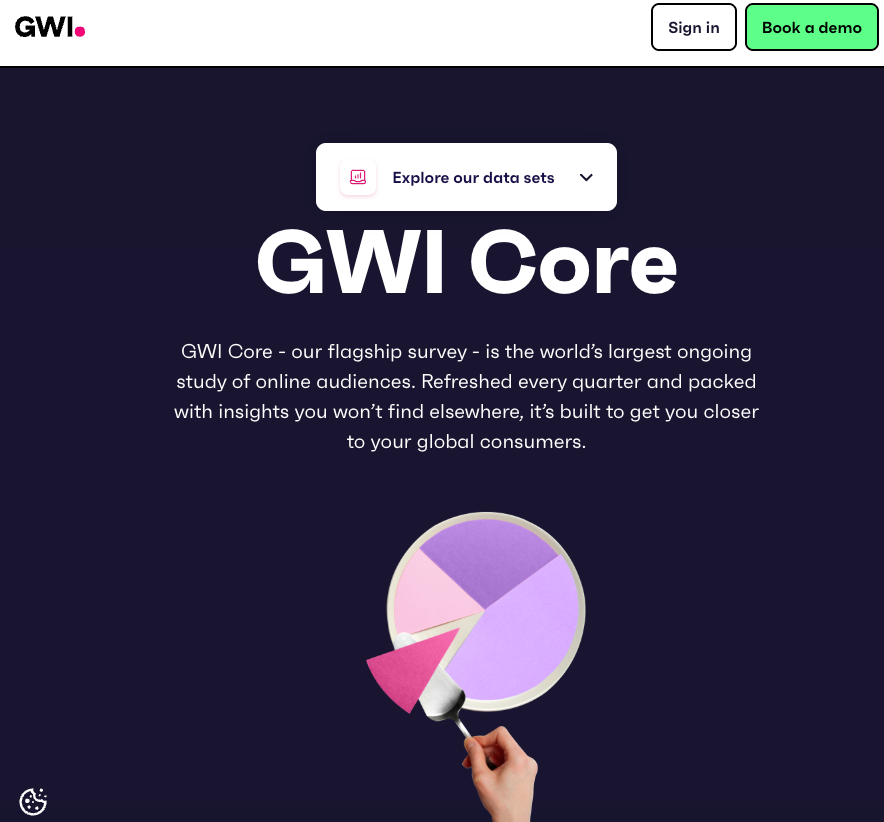
Best for: Understanding what defined online audiences say they think, do, and buy. GWI Core describes harmonized survey questions across 53 markets, with a quarterly refresh. A marketing team could compare attitudes toward two categories across countries using the same question and audience definition.
The unit is a surveyed population, not observed transactions. Keep the wave, base size, geography, weighting, and question wording with each chart. Check plan-specific history and export options. Use GWI when audience attitudes drive the decision; choose a retail measurement source when the question is what sold in a channel.
7.NIQ — retail sales and shopper panels
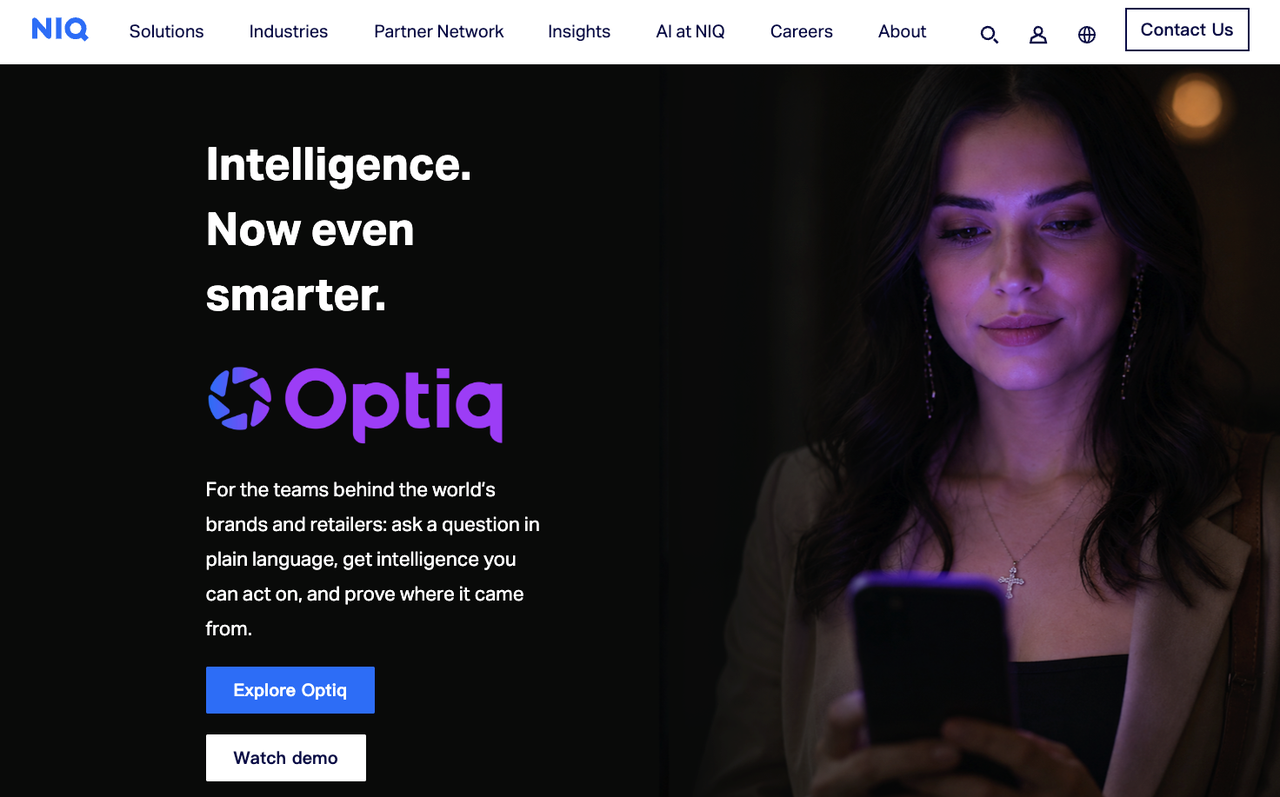
Best for: Consumer-goods teams that need category, product, channel, and shopper evidence. NIQ distinguishes retail measurement from consumer panels: one examines sales through covered retailers; the other follows participating households. Its consumer-panel overview explains why the measures can differ.
A category team could inspect a product's channel trend, then use panel data to ask which shoppers changed behavior. Neither dataset should be presented as universal coverage without checking market and retailer participation. Confirm the country, category, time period, delivery format, and licensed export scope in the proposed NIQ product.
What Should Teams Test Before Buying?
Give shortlisted products the same question, source boundary, date range, and required handoff.
Run a Pilot With Known Questions
Use a known answer, a mixed-evidence question, and one the platform should qualify.
For monitoring, ask what changed and where the source lives. For account research, include an acquired company. For consumer research, specify the audience and market.
Score missing data separately from wrong data. Record correction time and citation quality. A fast answer with an unclear denominator is not a faster decision.
Review the Handoff From Insight to Action
Export a finding as the recipient uses it: CRM note, slide, CSV, battlecard, alert, or memo.
Preserve the question, source period, geography, filters, caveats, and owner. Ask another colleague to verify the conclusion of the export.
Then change one upstream fact and see whether the saved result signals staleness.
Where Does Human Judgment Still Matter?
People still define the market, compare unlike evidence, and decide whether a signal matters. A platform cannot resolve a poor category boundary by adding more records.
Human review is especially important when the result blends reported facts, survey estimates, modeled traffic, enrichment, or predictions. Those evidence classes should not collapse into one confidence label.
Researchers must also interpret absence. A missing funding round, low traffic estimate, or small survey base does not prove that a company, audience, or market is unimportant. The final decision belongs to a person who understands the question and the cost of being wrong.
Conclusion
The best market intelligence tools match the evidence to the research job. Crayon, Similarweb, and AlphaSense address different forms of market movement; Crunchbase and Apollo support company and GTM work; GWI and NIQ serve distinct consumer and retail questions.
Choose from a matched pilot, not the longest feature list. Preserve sources and research conditions through the handoff, then keep a person responsible for interpreting modeled or incomplete evidence.
SpringBrand's current site presents an AI-native plugin marketplace with research capabilities for agents. That does not establish integration with all seven products. Its current site explicitly lists Apollo; verify each of the others before using it to collect or pass along a research result.
FAQ
Which tools keep historical snapshots instead of only current data?
Similarweb documents up to seven years through its API; application access varies. AlphaSense retains dated documents, while GWI offers long-term trended survey data on eligible plans. Ask Crayon about exportable snapshot depth.
Can a tool separate primary sources from syndicated coverage?
AlphaSense documents filters for filings, company documents, news, and broker research. Other products may identify a data class without exposing its underlying records. Test separate exports for primary material and modeled output.
How do platforms handle company mergers and brand-name changes?
No consistent behavior is documented across these seven tools. Test a merger, former name, subsidiary, and redirected domain. Check whether profiles preserve or split the history.
Do platforms disclose the methodology behind modeled market-size estimates?
Some disclose inputs and methods, but not enough to reproduce every estimate. Crunchbase explains directional signals; Similarweb, GWI, and NIQ publish methodology information. Ask for the base period, geography, exclusions, and revision policy.
Can alerts be limited by geography and language?
Controls vary by product and dataset. AlphaSense saved searches support several source and company filters; Similarweb and GWI provide geographic analysis. Ask vendors to demonstrate the required country-language pair. Geography alone does not establish local-language coverage.